
Key Market Insights and Stocks Covered This Week
- Inflation came in hotter than expected, and the US 10-year yield still fell.
- The S&P 500 is at its lowest forward multiple since 2023, with third-quarter earnings expected up more than 30%.
- Morgan Stanley says $5,000 gold by the second quarter of 2027. Could it be earlier?
- Australian unemployment hit a five-year high of 4.7%. The RBA’s pain threshold is 5%.
- Sydney clearances fell to 27.1%, and there could be much pain to come in Australian housing.
- Report Spotlight: Telstra
Get this in your inbox every week, free. Sign up to fatLITE →
The Verdict
We have been of the view that the US bond market was stabilising, that yields had peaked for the year, and that a benign September inflation print could pull the 10-year yield back towards 5%. The inflation data wasn’t benign, with headline CPI rising to 3.7%, above expectations of 3.6%, and producer prices rose 1.3% in the month against a forecast of 0.6%. Bonds rallied anyway, and the 10-year yield fell to 5.09% on Thursday. There were two reasons. Firstly, the market had become overly bearish and pessimistic on bonds following the turmoil that has played out in September/October. Secondly, value has re-emerged once again in bonds (on a near-term basis), and this was evident in well-received bond auctions.
We remain of the view that peak yields have been seen this year in the bond market, with the 10-year yield sustaining a sharp downside reversal. The 5% level now looks to be the new yield floor for the US 10-year yield, which has only just really returned to the historical normalised trading range. We are definitive bears on a long-term basis, but near-term oversold conditions point to stabilisation ahead in coming months.
For equities, the September–October correction looks well advanced. The S&P 500 is trading below 19 times forward earnings, the lowest multiple since 2023, and third-quarter earnings are expected to rise more than 30%. Our base case is that a risk-on environment should ensue into year-end that might surprise in terms of upside. Momentum might also carry over as far as March next year. Now is the time to put cash and liquidity to work.
In Australia, Thursday’s jobs data supported our view that the RBA may have finished hiking, especially with housing so fragile – more on that later. The economy is not the market, and our base case is for the ASX 200 to finish in record territory this year, given our view that risk assets, gold and commodities will rally into year-end, where the resources sector (that is not tied to the domestic economy) will do the heavy lifting.
The Calls
Bonds
The US 10-year yield closed at 5.24% last Friday, fell to 5.18% on Wednesday despite the hotter CPI print, and dropped another 9 basis points to 5.09% on Thursday. The 30-year yield fell to 5.43% and the 2-year to 4.75%. Investors returned to the bond market with gusto as real value emerges in US Treasuries, which had become acutely oversold. Bond volatility also eased. The MOVE index had turned lower once the advance in the 10-year yield stalled at about 5.4%, and fell another 2% to 99 on CPI day.
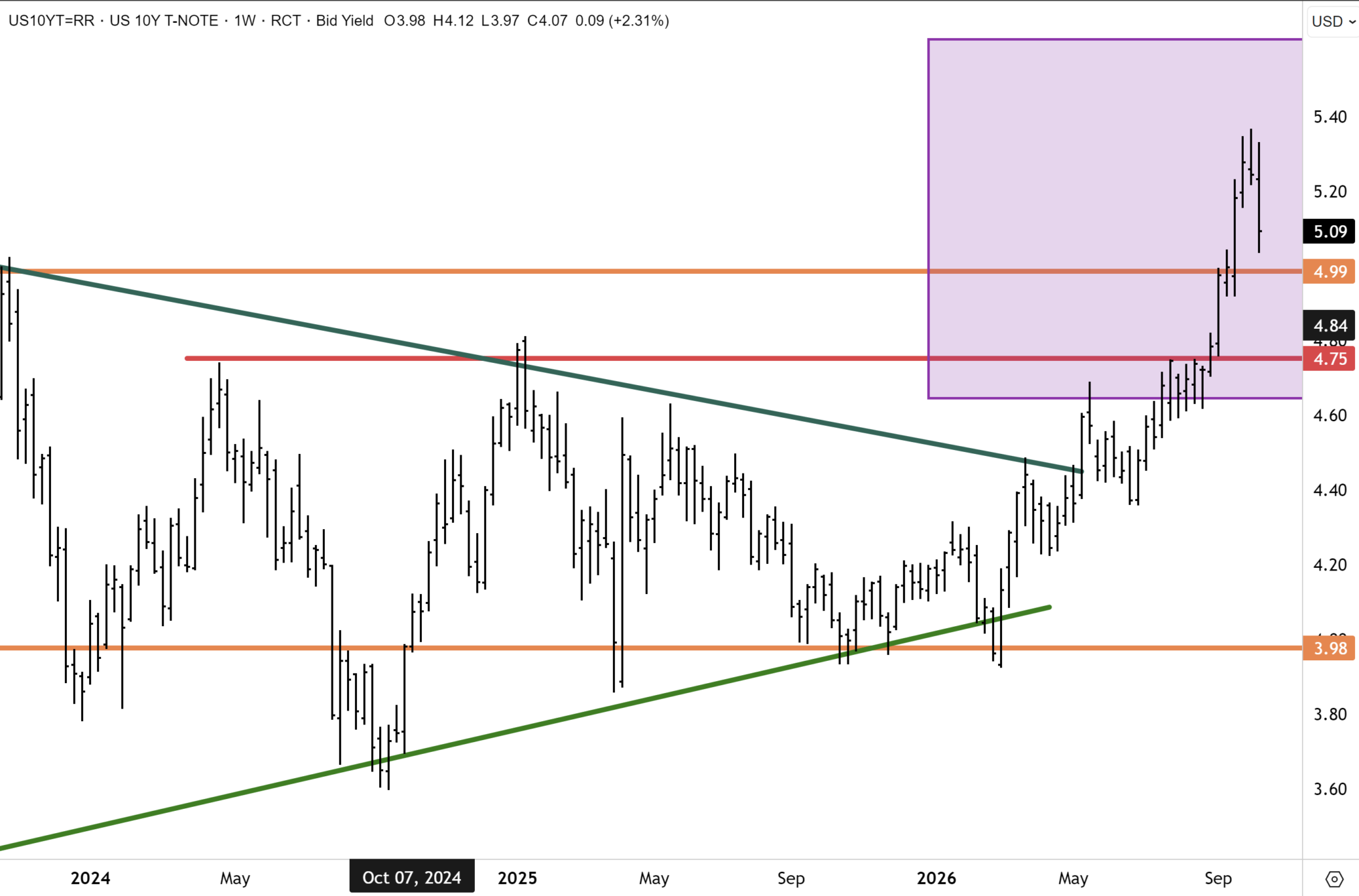

Wall Street has started to see value in bonds again. Goldman Sachs pointed to limited stress in credit markets, Citigroup favoured shorter-dated Treasuries, and BlackRock and Morgan Stanley Investment Management have both turned more bullish in recent weeks. Last week’s Treasury auctions were well received.
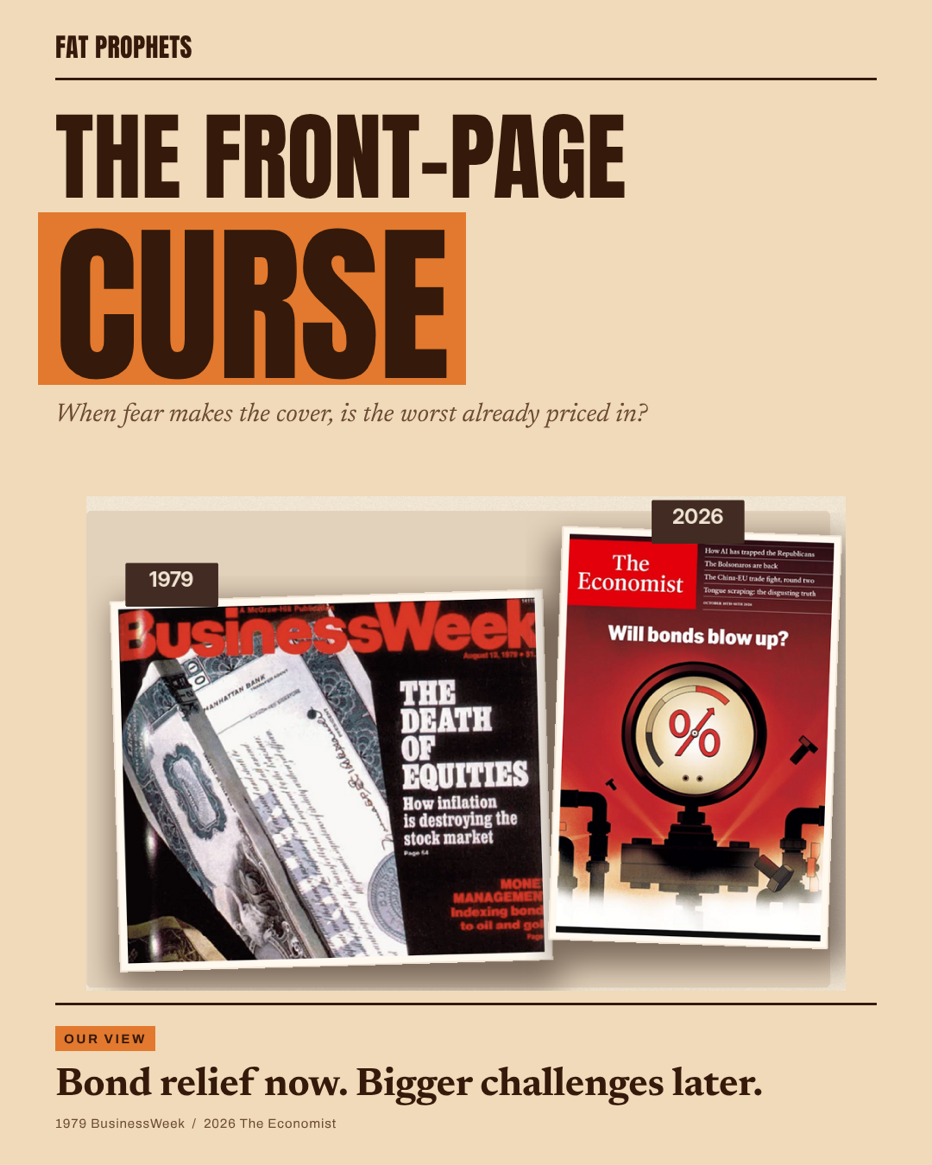
When fear makes the front cover, the worst is often already priced in, and we have long treated cover stories like that of The Economist on 10 October as a contrarian signal. The Death of Equities cover in 1979 came shortly before one of the strongest bull markets on record.
The Fed
New York Fed President John Williams said one more hike may still be appropriate this year, but he had no reason to believe the Fed would need to do more, and Christopher Waller said the rise in long-term yields was already curbing demand in housing and autos. After the CPI print, markets raised the implied probability of a hike this month to 37%, from 22% on Tuesday. While rate hike expectations have risen this week on the back of higher inflation, our base case is for no hike at the upcoming FOMC meeting at the end of the month. If the Fed does hike, it will likely be in December after the midterms, and that might be it in terms of this tightening cycle. Fed Chair Kevin Warsh, speaking at the IMF-World Bank meeting in Bangkok on Friday, declined to signal the Fed’s next move, saying “I don’t prejudge meetings”. The odds of an October hike fell to about 17% from roughly 30% while he spoke, and by Friday’s close the CME FedWatch tool put the chance of the Fed holding at its 27–28 October meeting at 82%.
Equities
Equities had a more challenging week. The S&P 500 fell 1.35% to 7,700 on Wednesday after the CPI print, and the Nasdaq dropped 2.02%, led by chip and AI stocks. On Thursday money moved into small caps and old-economy sectors, and the Russell 2000 rose 1.4% and the Dow 1.1%. The selling resumed on Friday. The S&P 500 fell 1.09% to 7,659.44, closing below its 50-day moving average, while the Nasdaq dropped 2.14% and the Dow 0.34%. Chip stocks led the way south again, with the VanEck Semiconductor ETF down 3% on the day and 10% over the week, its biggest weekly fall since April 2025. For the week, the S&P 500 was down roughly 1.6% and the Nasdaq 4.4%, its worst week since June, while the Dow rose 0.7% as money moved into energy and old-economy stocks. The correction that began in early September and spilled over into October looks well advanced now. A lot of risk has now been priced in.
Uncertainty around the midterms has likely kept some investors on the sidelines. History shows us that equities and risk assets generally perform well after the midterm election, which might see gridlock in Washington and foreign policy dispersion from the WH. JP Morgan’s trading desk turned bullish last week, citing clean positioning, extremely bearish sentiment, continued earnings growth, coming buybacks and improving economic data. The second half of October, when US earnings season gets underway, has historically marked an inflection when markets resume upward momentum.
The technical setup for the S&P500 favours a resumption of upward momentum into year-end, and a topside breakout that carries the benchmark above 8,000 and beyond by December.
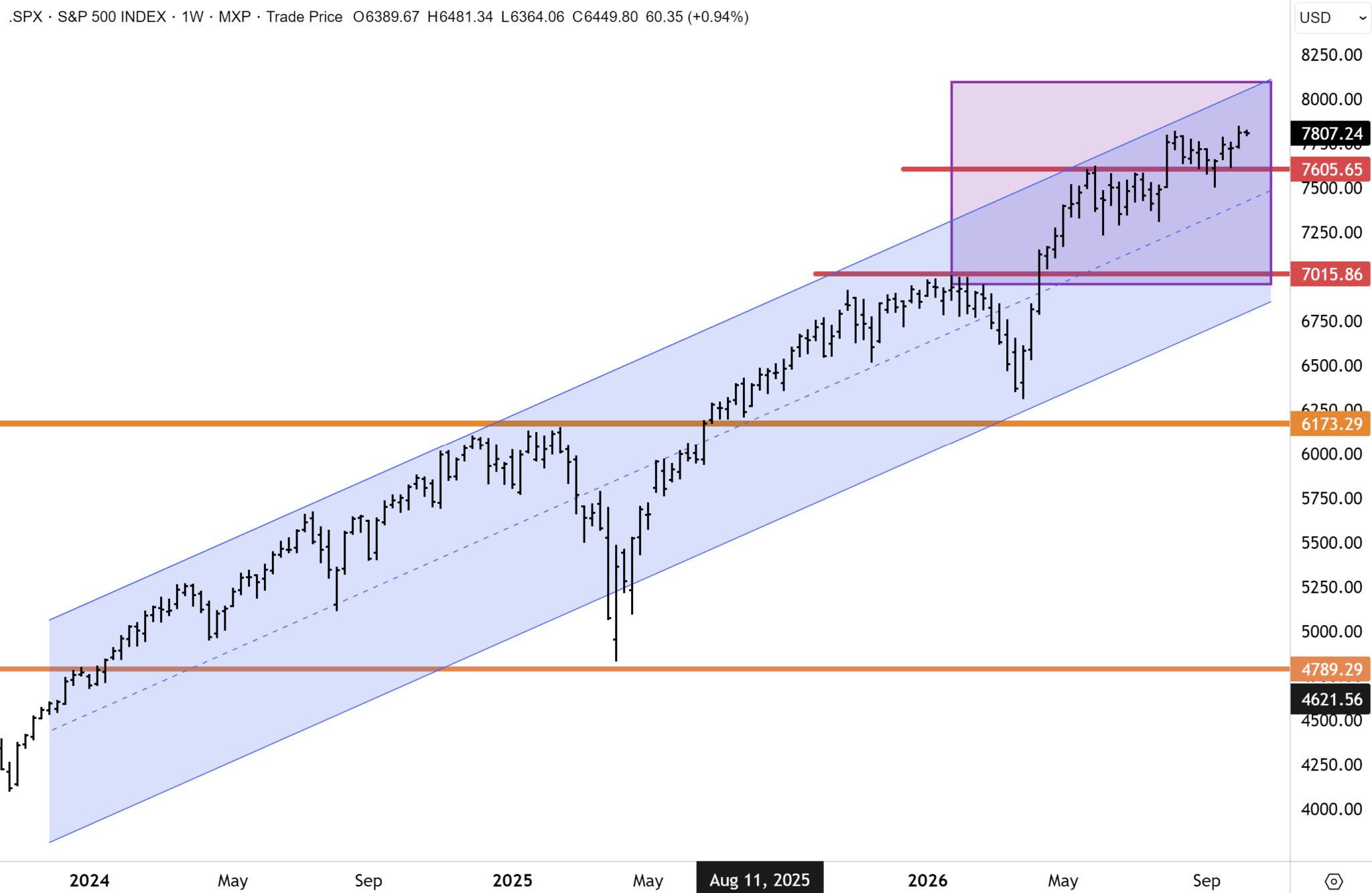
The market-cap weighted S&P 500 has hidden the extent of the correction. Most of its members have had a sizeable drawdown since August, while the Mag 7 have held up best. The other 490 companies that comprise the SPX benchmark are therefore due for a catch-up rally.
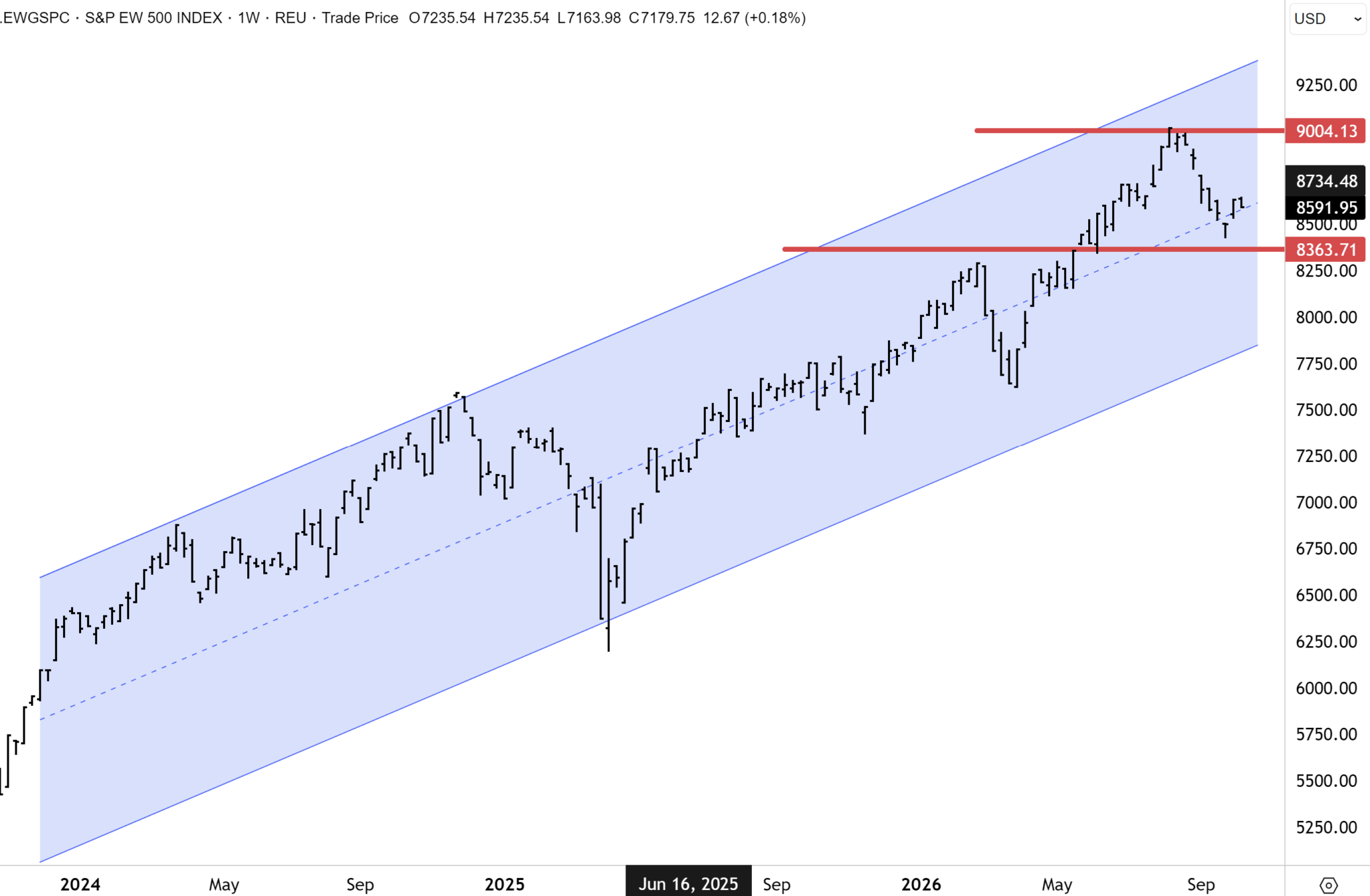
Our base case is for market breadth to improve considerably into year-end, as many companies report better-than-expected earnings. Among the mega-caps, we hold Apple, Microsoft, Meta and Google across our portfolios, and have added Amazon and Meta Platforms to the Fat Prophets Contrarian Fund on the view that the year-long correction in the hyperscalers is over.
Oil and geopolitics
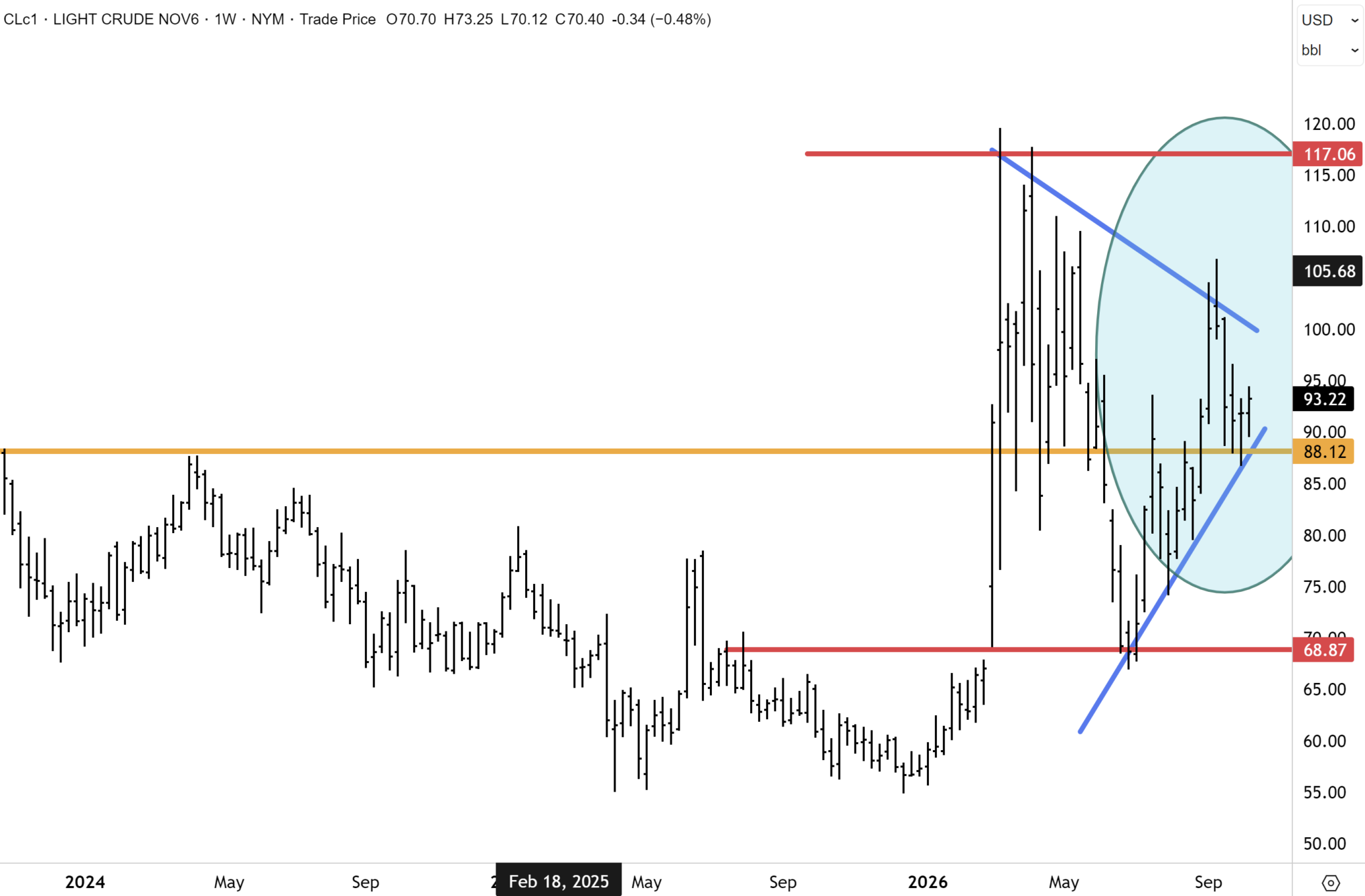
Oil remains a key risk source. Iran stepped up attacks ahead of the US midterms. A strike on Riyadh’s international airport killed 14 people, a freighter was sunk in the Strait, and there was a further attack on Saudi Arabia on Thursday. For oil to resume upward momentum, WTI crude needs to confirm a breakout above $100. A downside break below key support at $88/$90 would likely see WTI extend downwards into a lower trading range, which is our base case. WTI rose 3.5% on Friday to settle at $101.41. One close doesn’t count as a breakout yet, but $100 remains a key level to monitor.
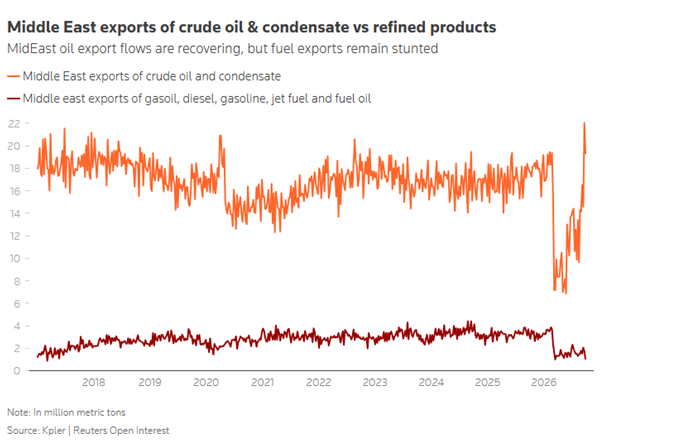
Like so many, we have been hoping for an end to the Russia/Ukraine war. To date, this has proven an elusive outcome, but an end to the conflict might be nearing. Ukrainian President Zelenskiy has proposed new talks with US envoys Steve Witkoff and Jared Kushner, and the Pentagon has capped the speed of Ukrainian drones flown through the Starshield satellite system, adding to the pressure on Kyiv to negotiate. A settlement could bring back Russian refining capacity, about 50% of which has been taken offline by the war.
We are also optimistic that a deal will be reached with Iran. Prediction market Kalshi is not pricing an end to the Middle East conflict until the middle of next year. So what happens if both wars did end abruptly and soon? One potential consequence is that oil and fuel prices could plunge – and this would remove a lot of pressure on financial markets.
Gold
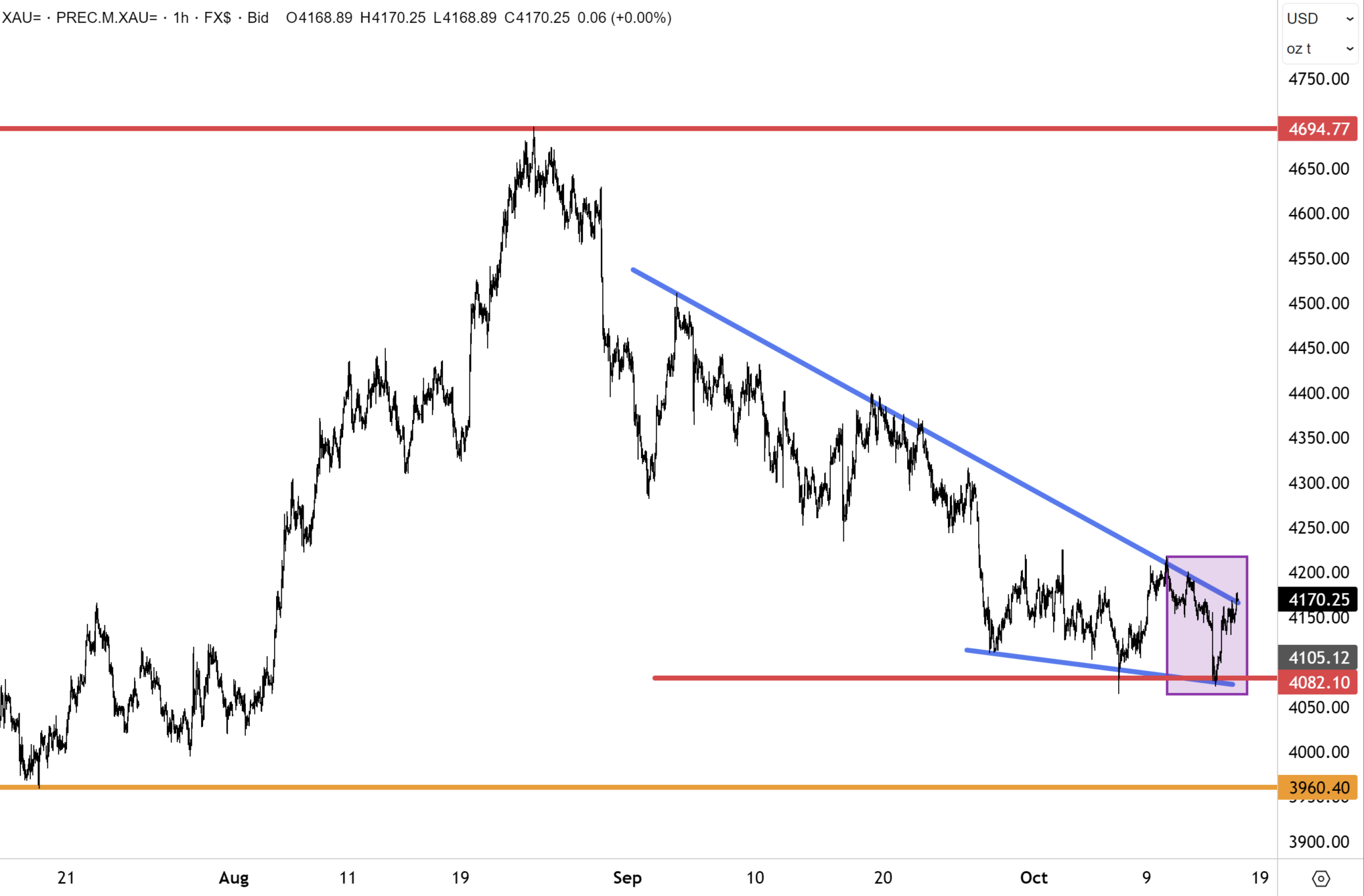
Gold fell to $4,124 on Wednesday as the dollar rose after the CPI print, then recovered to $4,188 on Thursday as yields and the dollar fell. Aussie gold miners surged on Friday. The spike down in bond yields saw gold retest and rebound off the October lows and quickly rally back to the downtrend in place from the August $4,700 high. The gold outlook remains constructive. Morgan Stanley targets $5,000/oz by the second quarter of 2027, and we still believe gold could reach that level by year-end. Morgan Stanley noted that gold has fallen only 10% from its August high despite a Fed hike, a stronger dollar and high bond yields, which it puts down to strong central bank buying and ETF inflows. China’s gold imports reached 1,100t through August. I would also add that the deep pockets that emerged to buy physical gold when it fell below $4,000/oz are now back and buying once again.
The Local
The ASX 200 rose 1% on Friday to close at 8,806, also about 1% higher for the week, as Thursday’s rotation reversed. Information technology was the strongest sector, up 5.6%, led by WiseTech (+9%) after ASIC closed two investigations with no-action letters on Thursday. Materials rose 3.4%, while financials and consumer staples slipped. Gold miners rose 4% after gold’s overnight rally. Small caps rose 2.2% but still finished the week lower, so outside the large caps, Friday looked more like a good bounce. Over the week, the banks and the defensive sectors led.
Employment fell by 39,300 in September, and the unemployment rate rose to 4.7%, a five-year high. Markets moved the odds of the RBA holding at 4.60% in November from 66% to nearly 90%. We hold a non-consensus view that the RBA might have finished hiking, and I don’t see another increase next month in the wake of the unemployment print – which might damage the economy and push Australia into an official recession. I remain of the view that the unemployment rate will reach 5% or higher by the first quarter of next year. The RBA Governor Michele Bullock has indicated 5% is its pain threshold for unemployment.
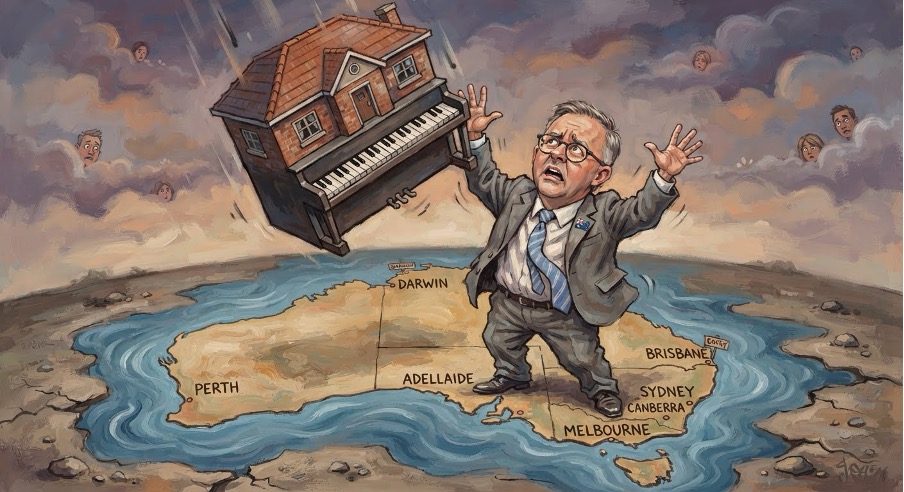
Housing is a key risk. SQM Research’s Louis Christopher says the downturn is getting worse with no bottom in sight. Sydney’s final auction clearance rate fell to 27.1%, which he believes is the lowest on record outside the COVID-19 period, and Melbourne’s was 40.8%. Equifax data showed mortgage demand down 19.2% in September from a year earlier, and first-home buyer demand down 22.1%. Christopher expects national prices to fall about 9% this year and further in the first half of 2027, and sees a 20% peak-to-trough fall in Sydney as “very much possible”. It makes more sense now than ever to diversify equity holdings offshore (reach out to Patrick Ganley at wealth@fatprophets.com.au for more information) and keep well away from consumer discretionary stocks.
I expect the controversial negative gearing policies introduced by the Federal government earlier this year to be rolled back, one way or another, by mid-2028.
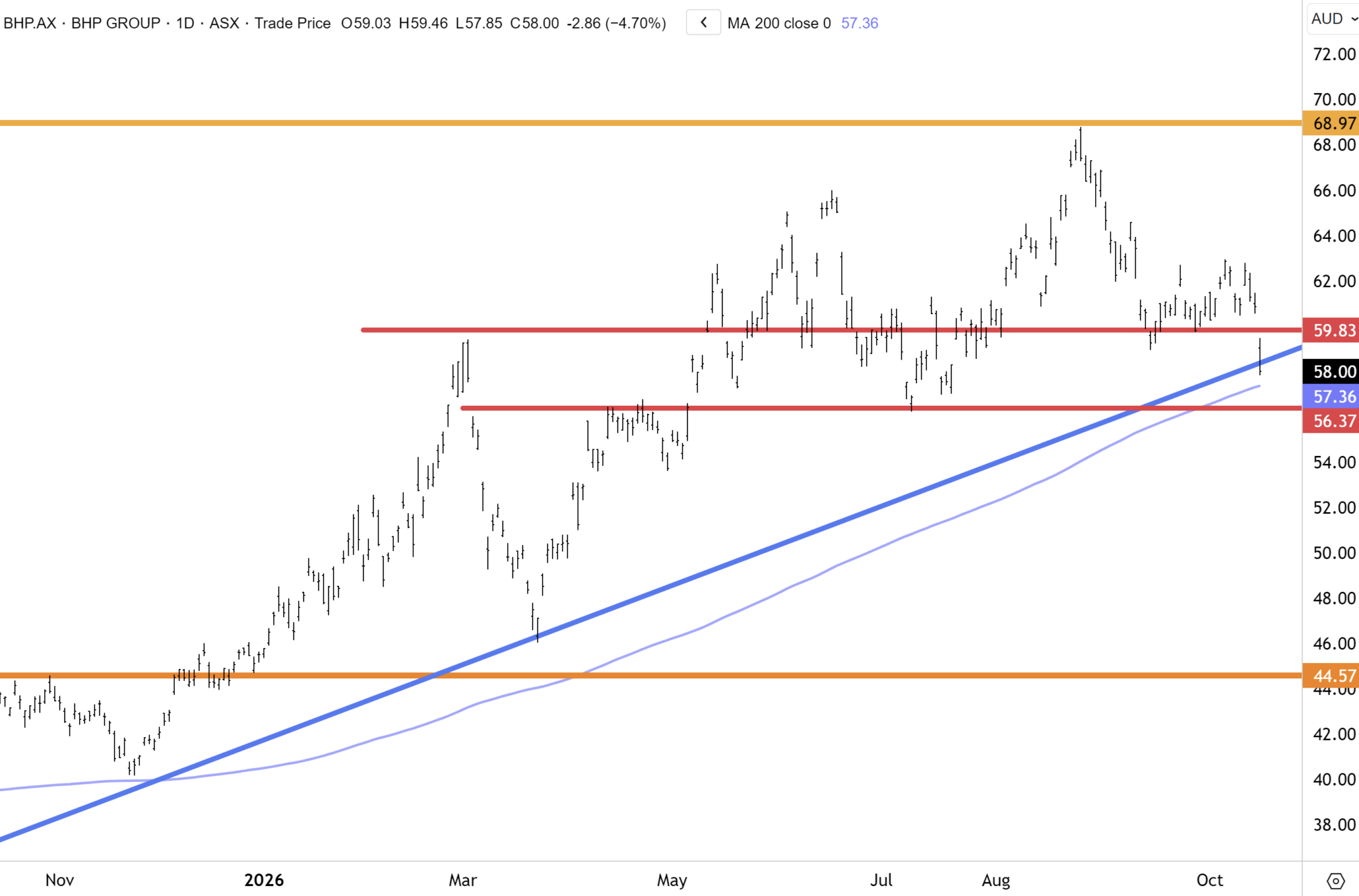
BHP had corrected about 15% from recent highs with a 4.7% fall on Thursday, as its copper exposure was treated as a proxy for AI demand. Copper provided about 54% of BHP’s underlying earnings in the last result, and our iron ore view is above consensus. The pullback to key support at the 200-day moving average and upward trendline opens a technical buying opportunity in our view. The stock quickly recovered to the tune of 3.5% on Friday.
Among the gold miners, St Barbara rose 8% on Friday and has sold its remaining stake in the Simberi project for about A$453m, which leaves it with roughly A$880m in cash against a market value of about A$974m.
Report Spotlight
Telstra (ASX: TLS) – Buy
We retain our Buy rating on Telstra. The shares drifted lower since SpaceX agreed to buy US 800 MHz spectrum, but the deal covers US airwaves, and in Australia Starlink is a Telstra supplier rather than a competitor. Telstra reaffirmed FY27 guidance at its AGM for cash EBIT of A$4.75–4.95 billion, marking modest growth of 2% to 6%. Strategic capex is expected to fall from A$457 million to A$200–300 million, and the new A$1 billion buyback would retire around 2% of shares, so we estimate per-share cash earnings can grow at a mid-to-high single-digit rate. The shares trade on 21.5 times forward earnings with a 4.5% cash yield, 90.5% franked. Given the large cost base, we believe the telcos, including Telstra, will be beneficiaries of deploying AI throughout their business. The dividend is back in modest growth mode, and our view is that the RBA has likely reached the peak in this cycle. Any relief on this side should support an upward re-rating of Telstra shares from current levels.
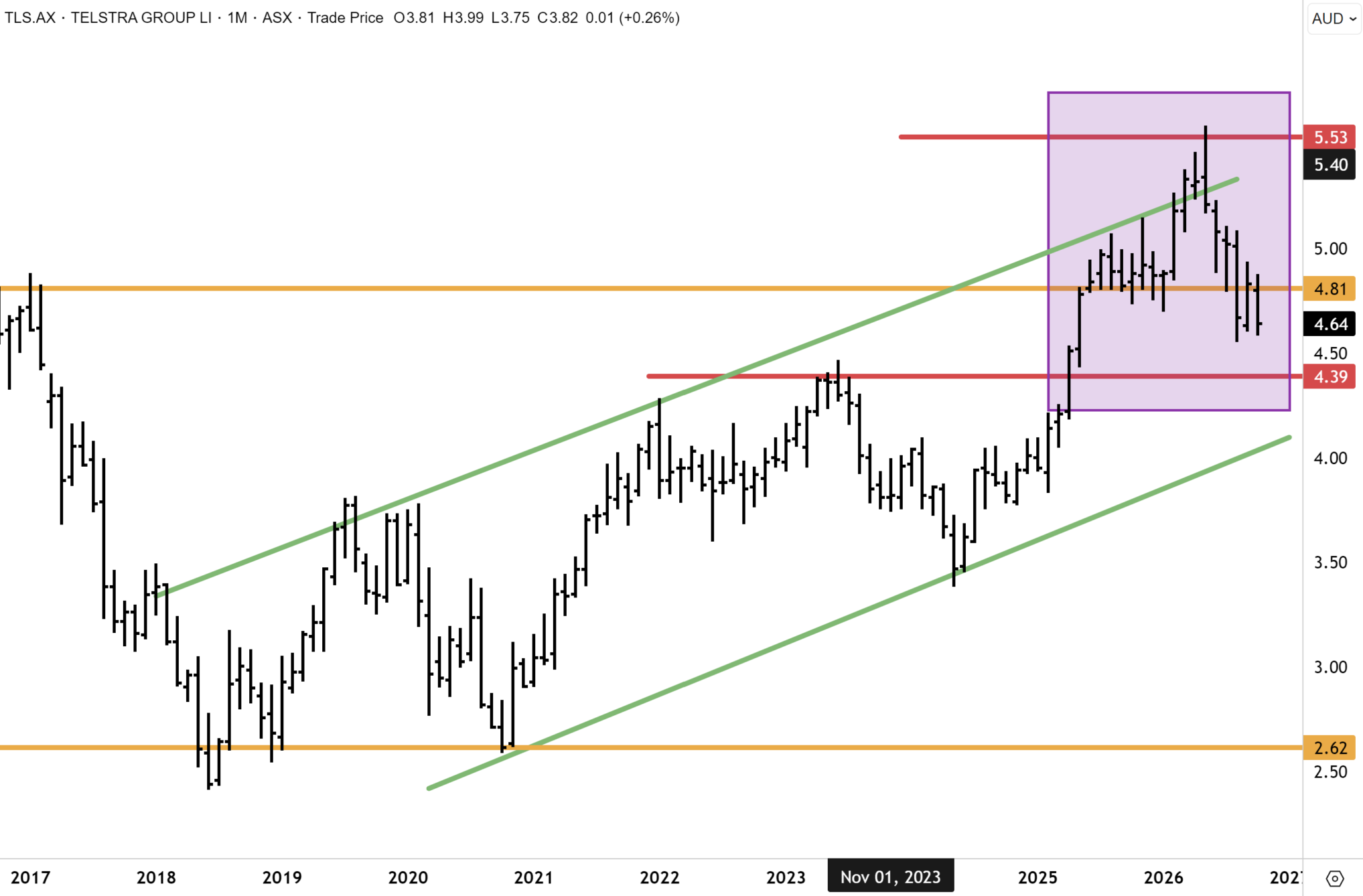
Telstra has continued to correct lower since our last update. The key support level flagged at $4.80 a month or so ago has been broken, and TLS has extended lower toward intermediate support at $4.60. We believe there is a good probability that Telstra will find support at these levels and reassert to higher levels later in the year, given solid underlying yield support. A deeper correction is playing out, with the risk of a pullback to $4.40 over the coming weeks carrying a higher probability outcome. However, a lot of unproven future risk has been more than adequately priced in. We remain of the view that Telstra has a favourable technical risk/reward skew given lower valuation, rising free cash flow and a higher dividend yield.
This fatLITE is a short version of what our members read. Platinum members get:
- fatCHAT, our market note, four mornings a week, Tuesday to Friday
- the full fatWRAP every Friday
- every stock report across Australasian Equities, Global Equities and Global Mining, each with a clear buy, hold or sell call
- other member content, including webinars
Get this in your inbox every week, free. Sign up to fatLITE →
Have a great weekend.
Carpe Diem!
Angus
